Journal
Local SEO Lessons from Independent Flower Shops
Small flower shops sell perishable goods to people in a hurry, so they live or die by local search. What other small businesses can learn from how they handle Google, reviews and opening details.
By Waleed | | Updated
Why florists understand local intent so well
A person searching for flowers is rarely browsing in the abstract. They may need a bouquet delivered today, sympathy flowers sent with care, wedding flowers by a certain date, or a thoughtful arrangement near a particular district. The search has emotion, timing, and geography folded into it.
That is why independent florists are such strong examples for local SEO. Their best marketing does not begin with tricks; it begins with clarity. Where do you serve? What can you do today? What needs notice? What makes your work different from the generic alternatives?
Local SEO, in the simplest sense, is the practice of helping nearby customers discover a business through search engines, maps, and local directories. The concept overlaps with what is often called local search, where proximity, relevance, and reputation shape what people see first.
Lesson three: Treat Google Business Profile as a front window
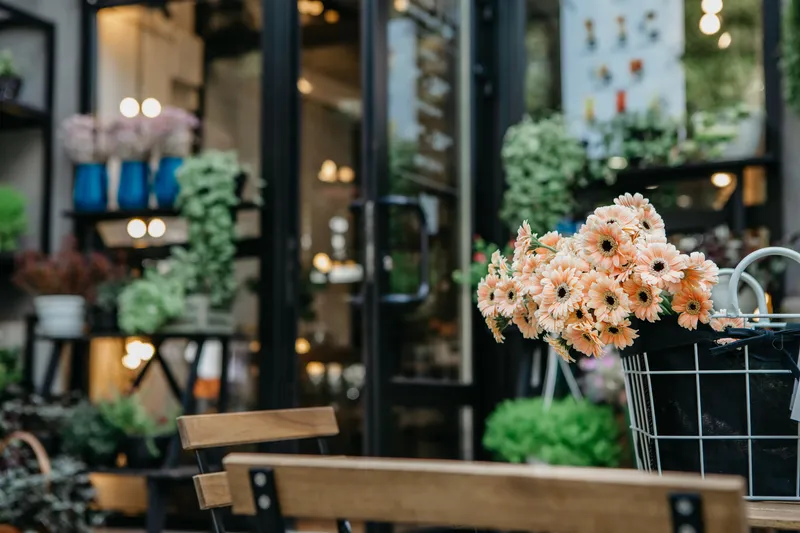
For many local companies, the map listing is the new storefront glass. Customers look there before they click through to the website. They check photos, categories, service area, reviews, and basic contact details. A neglected profile can make even a beautiful business feel uncertain.
Google’s own guidance on Business Profile is worth reading carefully because it explains the basics: represent the business accurately, keep details current, and help customers understand what you offer. The florist lesson is to make the profile feel alive without making exaggerated claims.
Fresh images matter. Not stock images, not generic roses against a white background, but real work: hand-tied bouquets, seasonal palettes, studio details, delivery-ready arrangements, and close-ups of texture. A small business should ask, “If a customer saw only this profile, would they understand our taste, our standards, and our location?” If that sounds like your situation, “Why Your Small Business Needs a Clear Customer Persona Before Running Ads” goes into the details.
Lesson four: Use constraints as trust signals
One of the most sophisticated things an independent florist can do is communicate limits gracefully. Flowers depend on season, supply, time, and craft. A shop that explains those realities can often feel more trustworthy than one promising everything instantly.
One Warsaw shop is worth studying for how plainly it states the basics. IFIORA, a florist in Warsaw, tells customers up front that it delivers only within Warsaw and that same-day orders close at 16:00.
That kind of specificity teaches a broader marketing lesson. Limits can be elegant when they are framed as care. A restaurant that requires advance notice for tasting menus, a jeweler that needs time for resizing, or a photographer who books a limited number of sessions per month is not being difficult. The business is protecting quality.
Lesson five: Photograph what makes you local
Local SEO covers more than text. Visual evidence tells a search engine and a customer that a business is real, active, and situated somewhere specific. Flower shops have an advantage because their product is naturally photogenic, but the principle applies widely.
Photograph seasonal work, your hands at work, your street, your doorway, your packaging, and the small details that show care. A florist might show spring branches, late-summer dahlias, winter evergreens, or a bouquet resting on a studio table before delivery. A ceramicist, tailor, café, trainer, or boutique hotel can do the same in their own language.
Images should be named and described sensibly when uploaded to a website. Give file names useful context without stuffing them with awkward phrases. “Seasonal pastel bouquet prepared in Warsaw studio” is more helpful than “IMG_4827.”
Lesson six: Let expertise show in small, practical answers
The best florist websites answer questions before they become barriers. How far in advance should wedding flowers be discussed? What happens if a certain flower is unavailable? Can the palette be kept but the stems substituted? What details are needed for delivery?
Small businesses often underestimate how powerful these practical answers are. They create long-tail search visibility, but they also reduce friction. A customer who feels guided is more likely to enquire, book, or buy.
Industry bodies can also be useful reference points for understanding professional standards and seasonal realities. For example, the Society of American Florists provides trade information that shows how broad and operationally complex the floral business can be, from retail presentation to supply chains and events.
A florist-inspired local SEO checklist
Use this as a calm, practical review of your own local presence. It is written for any neighbourhood business, flower shop or not.
- State your city, district or service area clearly on key pages, and in the footer too.
- Create pages for real customer occasions, needs, or problems rather than only product categories.
- Keep your Google Business Profile accurate, current, and visually rich.
- Use original photography that shows your work, your place, and your standards.
- Explain timing, booking rules, delivery limits, or appointment requirements without apology.
- Write helpful answers to common questions in natural language.
- Ask satisfied customers to review the actual service they received, with no scripting or pressure.
- Make contact details easy to find on mobile, especially for urgent local searches.
Lesson seven: Reviews should sound like lived experience
Reviews are especially powerful for florists because customers are often ordering for emotionally important moments. A good review may mention careful delivery, tasteful design, freshness, or kindness during a difficult occasion. Those details are more persuasive than a row of stars alone.
Small businesses should never manufacture reviews, incentivize them improperly, or write them for customers. Instead, make reviewing easy after a successful service. Send a simple follow-up, thank the customer, and invite them to describe their experience in their own words. See also “Seasonal Marketing Checklist: What Small Businesses Should Do Before the Holiday Rush”.
The most useful reviews often include the very phrases future customers search for: “birthday flowers delivered in the city center,” “bridal bouquet,” “last-minute anniversary gift,” or “careful consultation.” That is simply how happy clients talk.
Owners also ask
What can non-florist businesses learn from flower shops about local SEO?
They can learn to focus on intent, place, timing, and trust. Florists are found because people need something specific in a specific location, often by a specific deadline. Any local business can improve visibility by answering those same practical questions clearly.
How important are photos for local SEO?
Very important, especially for businesses where taste, atmosphere, or craftsmanship influence the decision. Original photos help customers understand quality before they enquire. They also make business profiles, website pages, and social previews more convincing.
Is it better to promise fast service or explain realistic timing?
Realistic timing is usually better. Clear deadlines, confirmation steps, and advance-notice requirements reduce disappointment and support a premium reputation. Customers can accept limits when they are communicated early and politely.
About the writer
Waleed writes Ten Cow Notes, about marketing for very small businesses: what is cheap, what works, and what is a waste of an afternoon.